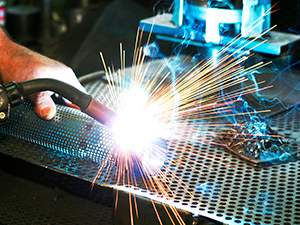
In modern healthcare environments, infection prevention is the cornerstone of patient safety. Central Sterile Services Departments (CSSD) rely on specialized equipment to clean, decontaminate, and sterilize surgical instruments efficiently. Stainless steel wire baskets, serve as a structural backbone throughout these critical reprocessing cycles.
[ Decontamination Zone ] ──> [ Washer-Disinfector ] ──> [ Autoclave Sterilization ]
Collect Dirty Instruments High-Pressure Spray Steam Penetration
♥ Application in the Decontamination Lifecycle
The healthcare decontamination workflow demands continuous handling under harsh physical and chemical conditions. AUKE stainless steel metal baskets act as primary load carriers from the point-of-use in operating rooms back through the reprocessing facility.
Pre-Rinsing & Automated Washing: Contaminated surgical tools are placed directly into open-mesh baskets. These containers enter washer-disinfectors, where high-pressure water jets and enzymatic detergents purge biological debris.
Ultrasonic Cavitation: For intricate instruments with fine lumens or hinges, baskets housing precise tool-fixators undergo ultrasonic cleaning.
Steam Sterilization (Autoclaving): Post-cleaning, loaded baskets transfer into high-temperature, high-pressure steam autoclaves to kill remaining microorganisms.
♥ Key Structural Features and Functional Benefits
AUKE stainless steel baskets deliver operational advantages tailored to stringent medical standards:
⒈ Optimized Permeability for Cleaning Agents:
Constructed from high-grade woven or welded wire mesh, the baskets maximize liquid drainage and gas flow. This open structure eliminates cold spots and pooling, allowing detergent solutions and high-temperature steam to achieve 100% surface contact with every instrument.
⒉ Superior Material Resilience (SUS304/SUS316):
Repetitive exposure to saline solutions, acidic descalers, and steam environments causes standard metals to rust or degrade. Using medical-grade stainless steel (SUS304 or SUS316) guarantees high thermal stability and corrosion resistance, preventing chemical leeching or structural weakening over thousands of cleaning cycles.
⒊ Smooth Surface Finish & Hygienic Design:
The baskets undergo advanced electropolishing to create a non-porous, micro-smooth surface. Burr-free joints protect technicians from glove tears and safeguard delicate sterilization wrap material from puncturing.
⒋ Ergonomics and Workflow Integration:
Designed with stackable feet, side handles, and custom dividers, these baskets enable efficient space utilization inside wash chambers and storage racks while keeping sharp surgical instruments organized and secure.
By unifying durability, chemical resistance, and ergonomic safety, AUKE stainless steel wire baskets streamline hospital decontamination processes, lower instrument replacement costs, and safeguard clinical outcomes.


In modern medical supply chains, maintaining sterile integrity, rapid access, and adaptable storage in clinical supply rooms is essential to everyday patient care. While plastic bins are widely used for general storage, stainless steel metal baskets provide critical operational advantages for managing sterile goods, surgical trays, and specialized hospital inventory.
PLASTIC CONTAINERS VS STAINLESS STEEL WIRE BASKETS
┌───────────────────────────────┐ ┌───────────────────────────────┐
│ ❌ Traps dust & humidity │ │ ✅ Free airflow (mesh design) │
│ ❌ Scratches hold pathogens │ VS. COMPARE │ ✅ Electropolished, non-porous│
│ ❌ Expensive molding costs │ │ ✅ Toolless custom sizing │
│ ❌ Outgassing risks │ │ ✅ Zero toxic outgassing │
└───────────────────────────────┘ └───────────────────────────────┘
Key Functional Advantages in Medical Storage
♥ High Customizability Without Tooling Costs:
Unlike plastic containers—which require expensive injection molds, long lead times, and high minimum order quantities—metal basket manufacturing uses precision bending, cutting, and welding. Hospitals can order custom dimensions, tailored dividers, and drop-down handles to fit specific shelf units without incurring costly tooling fees.
♥ Hygienic Surface Finish & Easy Cleaning:
Stainless steel wire storage baskets undergo electropolishing to produce a non-porous surface. Standard plastic surfaces easily scratch during daily use, creating micro-fissures where bacteria and biofilm lodge; metal baskets remain completely smooth, withstand harsh chemical disinfectants, and facilitate effortless cleaning and decontamination.
♥ Zero Outgassing and Non-Contaminating Properties:
Medical supply rooms store items like wound dressings, silicone tubing, and delicate sterile barrier packaging. Plastics can degrade, off-gas volatile organic compounds (VOCs), or collect static charges that attract particulate matter. High-grade stainless steel (SUS304/SUS316) is chemically inert and completely contaminant-free, keeping sensitive medical goods pure.
♥ Optimal Air Circulation & Dust Prevention:
The open-mesh structure of metal wire baskets prevents dust accumulation and eliminates stagnant humidity microclimates that compromise paper-and-film pouch packaging. Air flows freely across all shelves, preserving sterile conditions and simplifying visual inventory checks for clinical staff.
♥ Heavy-Duty Structural Integrity:
In high-density storage applications like pharmacy shelving or heavy surgical kit racks, plastic bins warp or crack under heavy loads over time. Metal wire storage containers maintain structural stability under high weight capacities, providing long-term value and lower total cost of ownership (TCO).
By integrating custom stainless steel storage baskets into supply rooms and sterile storage areas, healthcare facilities improve infection control standards, maximize shelf capacity, and ensure reliable supply management across clinical departments.


In high-stakes healthcare environments, accurate categorization of pharmaceuticals and medical supplies is fundamentally tied to patient safety, error reduction, and strict infection control. Misidentified medications or mixed surgical instruments directly jeopardize clinical outcomes. Specialized metal storage and sterilization baskets offer versatile, structural methods for visual sorting and physical segregation across hospital supply chains.
┌──────────────────────────────────────────────┐
│ Categorization Strategies for Metal Baskets │
└──────────────────────┬───────────────────────┘
┌──────────────────────────────────┼──────────────────────────────────┐
▼ ▼ ▼
[ Physical Barriers ] [ Surface Identification ] [ Form & Fabrication ]
• Fixed/Sliding Dividers • Color-Coded ID Tags • Wire Mesh (Light items)
• Modular Compartments • Laser-Engraved Plates • Perforated Sheet (Medication)
Multi-Tiered Strategies for Material Sorting
Healthcare facilities utilize three core design mechanics within customized metal baskets to categorize inventory systematically:
◆ Direct Labeling and Engraved Tagging:
To identify broad product categories—such as narcotics, IV accessories, or specific surgical sets—metal baskets integrate permanent identification plates. Stainless steel or anodized aluminum tags can be precision laser-engraved with alphanumeric codes, barcodes, or department names.
Color-coded ID tags allow clinicians to instantly recognize supply categories from across a storage room, accelerating picking speed and minimizing selection errors during urgent procedures.
◆ Internal Compartmentalization:
For precise segregation of similar items within a single unit, baskets feature fixed or removable internal dividers. Adjustable wire partitions allow sterile processing technicians to separate various sizes of surgical clamps, ampoules, or syringes within the same footprint. This prevents physical cross-contamination, keeps delicate instruments from striking one another, and maintains strict stock organization.
◆ Visual Differentiation via Fabrication Techniques:
The most intuitive method for immediate visual distinction lies in structural variations—specifically perforation geometry and manufacturing styles:
Patterned Perforations:
Utilizing customized punching patterns (e.g., round holes, square mesh, or slotted geometric cutouts) creates instant visual cues for staff. A department might assign square-perforated baskets exclusively to respiratory supplies and round-perforated baskets to orthopedic trays.
Manufacturing Profiles:
Baskets built from welded wire, woven mesh, or heavy-duty perforated sheet metal serve different functional categories. Open wire baskets offer maximum fluid drainage for wash cycles, fine woven mesh holds tiny components without loss, and solid perforated panels protect fragile pharmaceutical ampoules from snagging.
Enhancing Safety and Operational Efficiency
By engineering clear physical and visual distinction directly into stainless steel baskets, medical facilities lower cognitive load on nursing staff, eliminate inventory confusion, and ensure strict compliance with healthcare regulatory standards.


Industry Advantages of Medical Metal Baskets & Dollys
Strict Automotive Grade Materials
Adopt SUS304 / SUS316L and high-strength carbon steel, with complete material reports, meeting automotive industry corrosion resistance and durability requirements
Full rounded corner, burr-free welding technology, corrosion-resistant surface finish & independent positioning compartments effectively safeguard stored goods against scratches and damage.