


Views: 451 Author: Lucian Publish Time: 2026-08-28 Origin: Site


Cleaning performance starts with the load
For purchasing managers and process engineers, a basket that fits the chamber can still create rework through uneven cleaning or poor drying. Its openings, supports and frame must expose the load, drain freely and meet the equipment correctly.
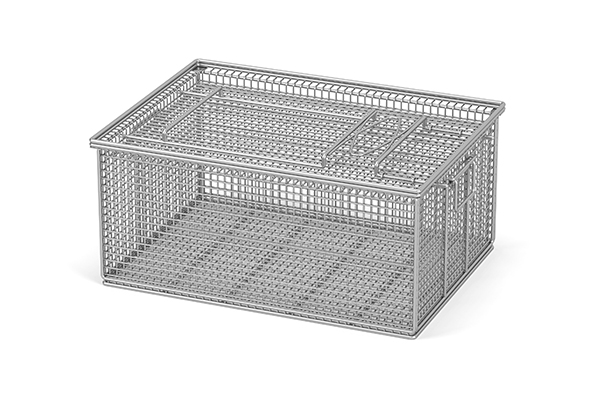
A solvent cleaning machine does not remove oil simply because a part is inside the chamber. Solvent must reach the contaminated face and carry dissolved oil away. If two parts lie together, or a support covers the oily surface, that area receives less cleaning action.
Cavitation occurs in the liquid, so ultrasound is also less useful inside an air-bound blind hole or between touching components. A cleaning program cannot compensate reliably for a load arrangement that changes from batch to batch.
Here, the basket works with hydrocarbon or modified-alcohol solvent, ultrasound, temperatures up to the stated 95°C maximum and vacuum drying. Metal baskets for industrial degreasing must hold the load securely while leaving the required surfaces open to the process.

The basket travels through the process with the parts. Its loaded geometry therefore affects transfer clearance, immersion, ultrasonic exposure and the route taken by liquid when the basket leaves a tank.
Open faces and stable spacing give fresh solvent a route to the oil film.
Part orientation lets liquid enter recesses while trapped air can escape.
Open low points release free liquid before vacuum drying removes the remaining film.
The practical difference: a storage basket is judged mainly by what it contains. A degreasing basket is judged by what the solvent, ultrasound and drying stage can reach after the parts are loaded.
The basket carries the intended part count without escape, rubbing or a shift into an unplanned position. Handles, lids and lifting points must suit the actual manual or automated transfer.
Give solvent routes into and out of the load. Supports should touch permitted contact areas rather than cover the faces that arrive with oil or grease.
Keep parts separated and orient cavities so liquid can enter and trapped air can leave. Ultrasound cannot act through a dry air pocket.
Let free solvent leave the basket and part cavities under gravity before vacuum drying removes the remaining film.
These duties are connected. A finer mesh may retain a small part but remove open area. A wider support may carry the load but cover more surface. The basket design has to make those tradeoffs around the actual component rather than maximize one feature in isolation.
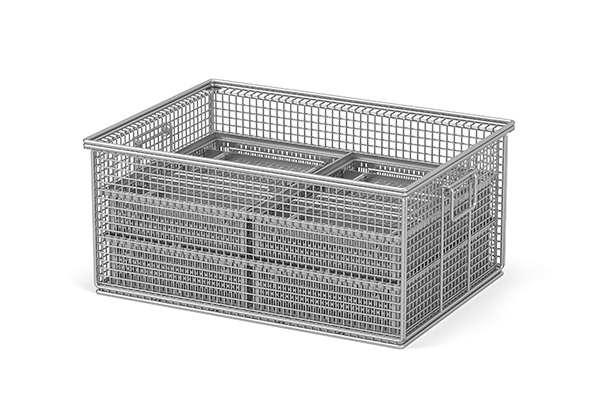
The outer frame carries the machine load. The open mesh admits liquid, while the fitted inner carrier can retain or separate parts without closing the complete basket.
The loaded basket must sit on the intended equipment supports without rocking, sagging or changing height.
Mesh or perforations retain the smallest relevant feature while preserving useful routes for solvent and displaced air.
Dividers and carriers stop broad oily faces from nesting and hold cavities at a repeatable, drainable angle.
The useful opening is not chosen from flow alone. Part size, burrs, loose fasteners, protected surfaces and the possibility of a component entering an opening all set limits on its shape and size. A mixed construction can keep broad areas open while adding local retention only where the load requires it.
Material selection comes after the service conditions are known. The solvent family, additives, contamination carried into the bath, maximum temperature, exposure frequency and the material of the cleaned parts all matter. A familiar stainless grade should not be specified by habit when those inputs are still missing.
Outside length, width and height answer only the first fit question. The loaded basket also has to enter through the door, land on the intended rails or pads, clear internal pipework and remain in the active cleaning zone. Handles and lids must stay inside the usable envelope throughout loading and unloading.
The base is the main connection between the basket and the degreasing equipment. Its feet, runners or frame members should meet the machine supports at known locations. If a support lands under unsupported mesh, or the loaded base bows between rails, the basket may sit at a different height and angle from the approved arrangement.
Usable internal envelope, door opening, insertion direction and clearance around lids or handles.
Rail spacing, support width, permitted contact zones and loaded basket height above the process hardware.
Manual lifting, trolley transfer, hoist or robotic handling determines the handle, pickup and locating features.
Part count, total weight, weight distribution and centre of gravity determine the frame and support arrangement.
Solvent family, ultrasound, maximum temperature, vacuum sequence and cycle movement set the service conditions.
Two baskets with the same outside dimensions are not necessarily interchangeable. Their bases may meet different support points, their handles may enter the machine differently, and their internal loading may put the same part in a different cleaning or drainage position.
We map the oily faces, cavities, smallest openings, permitted contact areas and protected surfaces on the part drawing. On the equipment drawing, we locate the usable chamber envelope, rails, support pads, pickup points and every area the basket must clear.
The load layout connects those drawings. We select the part angle and spacing, then place dividers or supports without covering the cleaning target. The frame, open panels, lid and handling features are built around the resulting load and machine contacts.
AUKE supports custom dimensions, mesh or perforated construction, dividers, lids, handles and part supports. Our published full-vacuum cleaning basket application describes stainless steel mesh baskets used with modified alcohols and non-halogenated hydrocarbons. The equipment and loaded part geometry still have to be defined for each project.
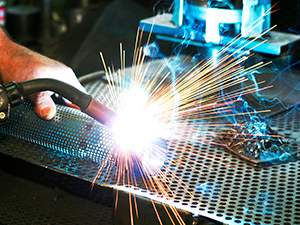
Weld placement should not create narrow pockets that hold contaminated liquid.
Sharp wire ends, spatter and rough projections can mark parts or injure operators.
Heat distortion must not move the base, supports or part angle away from the machine layout.
An empty-basket fit test confirms only the outer envelope. We run the trial with the intended parts, count, orientation and transfer method in the actual cleaning cycle.
The loaded base sits on the intended rails or pads without rocking, sagging or interfering with the chamber.
The named oily surfaces, recesses and contact areas meet the customer's cleanliness requirement with the intended load.
Parts leave the cycle without liquid collecting in basket corners, support pockets or cavities held in the wrong orientation.
The load remains retained through transfer and the cycle without unacceptable movement, rubbing or contact marks.
After the trial, the part position, support spacing, equipment contacts and critical openings belong on the controlled drawing. Measurements are taken after forming and welding because those operations can move the features proven in the machine.
The first discussion must connect the part, load and equipment.
Part drawing or clear photographs, including oily surfaces, cavities and protected faces
Part count, individual weight, total loaded weight and the preferred loading direction
Existing basket drawing or usable chamber dimensions
Machine rail, pad or support locations and the loading or transfer method
Solvent family, ultrasound use, maximum temperature and vacuum-drying sequence
Cleanliness, drainage, part-protection and handling results the trial must demonstrate
What AUKE can determine from these inputs: which surfaces require access, which part angle supports drainage, where the basket must meet the machine and which dimensions should be measured after fabrication.
A general basket may contain the parts but leave their orientation, contact faces and equipment support points undefined. Metal baskets for industrial degreasing must connect the loaded arrangement to solvent access, drainage, handling and the machine base.
Neither is universally better. The choice depends on the smallest part, required open area, load, part-protection needs and where supports can be placed. A mixed construction may use a rigid frame with mesh, perforated panels or formed wire only where each is useful.
Provide the usable chamber envelope, door opening, rail or support positions, loading direction and any pickup or locating points. Loaded weight and part distribution are also needed because they affect the frame and base.
Yes. AUKE accepts trial quantities and repeat orders. The trial should use the intended load and machine cycle so the approved result can be connected to controlled basket dimensions.
Send the part drawing, intended load, usable chamber dimensions and machine support locations. Add the solvent family, ultrasound use, maximum temperature and vacuum-drying sequence.
We will map those details to the required part orientation, openings, supports, frame and handling features. The resulting basket concept will be tied to the cleaning cycle and machine contacts, not only to an outside size.
Discuss the degreasing basket with AUKEEmail: linda@auke-bott.com | Tel/WhatsApp: +86 182-6169-0816


