


Views: 150 Author: Lucian Publish Time: 2026-08-20 Origin: Site


Engineering guide for industrial parts washing
The correct opening is not simply the smallest mesh available. It must retain the part in every possible orientation while still giving wash fluid, debris and drying air a direct exit path.
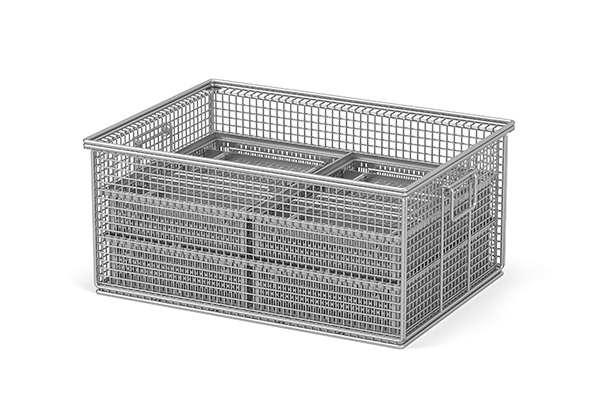
A cleaning basket performs two jobs at the same time. It keeps every component under control during loading, washing, rinsing, drying and transfer. It also exposes the component to the cleaning process and lets liquid, loosened contamination and air move out of the basket.
Larger openings normally improve flow and reduce the amount of wire blocking the process. They also increase the chance that a thin, tapered or irregular part can escape.
Smaller openings improve retention, but excessive mesh density can slow drainage, shelter contamination at contact points and extend drying time. A buyer therefore needs a functional specification, not a mesh-size guess.
Practical rule: define the smallest dimension that can pass through an opening after part rotation, then review the open area and drainage route needed by the washer. Nominal length and width alone do not describe escape risk.
A properly specified industrial metal basket for cleaning is a process fixture as well as a container. It establishes where parts sit, how much they can move, which surfaces remain exposed and how the load interfaces with the cleaning machine, lifting device, trolley or next operation.
The mesh, perforation, lid and corner details prevent a part from leaving the basket during agitation, tilting or transfer.
Open areas and controlled support points reduce shielding so the cleaning medium can reach the surfaces that matter.
The base, side walls and formed edges need continuous exit paths instead of low pockets that retain fluid.
Outer dimensions, handles and frames keep the basket compatible with the washer and downstream equipment.
What the buyer should check and why it changes the basket
Provide: part drawing, sample and the smallest local feature.
Why it matters: a shaft, pin, tab or diagonal profile may pass through even when the overall part is much larger.
Provide: allowed loading position and expected movement.
Why it matters: a separated part can use a different retention strategy from loose bulk-loaded parts.
Provide: spray direction, immersion, ultrasonic action, rotation or agitation.
Why it matters: process forces determine how parts move and where liquid must enter and leave.
Provide: basket orientation during wash, lift and dry stages.
Why it matters: the lowest point changes when a basket is tilted, rotated or lifted by a gripper.
Provide: type of oil, chips, abrasive residue or process debris.
Why it matters: fine openings may retain the debris that the washer is expected to remove.
Procurement drawings often state one mesh opening and stop there. That leaves several failure paths unaddressed. A small part may escape diagonally through a rectangular opening. A gap can also appear where mesh meets the frame, around a handle cutout, beside a divider, at a lid edge or in a corner affected by welding and forming.
The useful acceptance criterion is the maximum effective opening across the complete basket. It should cover the base, side walls, corners, joints, lid and any functional cutout. The criterion also needs to account for wire and forming tolerances.
If only one narrow feature creates escape risk, reducing every opening can penalize drainage across the whole basket. A divider, pocket, insert or controlled part orientation may retain the component while preserving a more open flow path.
Drainage is governed by the entire loaded assembly. A basket may have generous open area and still drain poorly if parts cover the base, a solid frame creates a dam, formed edges create pockets, or stacked components produce narrow capillary gaps.
Start at the lowest points. Check where liquid collects during each real orientation, including the lift out of the washer.
Keep the exit route continuous. Base openings, side openings and frame details must work together.
Review loaded open area. The part footprint and supports can block more flow than the mesh itself.
Control part contact. Small support points and repeatable orientation can improve wash access and drainage.
Check debris release. The opening must let expected chips leave without allowing the product to escape.
A sound drawing can still produce an unreliable cleaning basket if fabrication changes the opening, creates residue traps or leaves unstable joints. AUKE's production route includes design, cutting or punching where required, bending, welding, dimensional inspection, surface treatment, assembly and finished-product inspection.
Wire, mesh and frame geometry must hold the specified effective opening after forming and welding. For perforated designs, hole pattern, pitch, edge distance and formed corners require the same review.
Welds should secure the load path without leaving sharp projections. Material and surface treatment must be discussed against the cleaning chemistry, temperature and exposure time.
Inspection should cover the outer envelope, critical washer interfaces and maximum effective openings. A loaded-basket review can reveal blocked drainage paths and unexpected contact points.
The quickest route to a useful quotation is to send process evidence before asking for a price. AUKE can review the retention risk, washer envelope and drainage direction, then organize the basket details around the actual loading method.
Define the part: drawing or sample, smallest escape feature, weight and quantity.
Define the process: washer type, chamber envelope, chemistry, temperature and drying method.
Define handling: manual lift, gripper, conveyor, trolley, tilt and stacking requirements.
Review the concept: opening geometry, frame, supports, dividers, lid, handles and material.
Agree on evidence: drawings, measurements, inspection photos, weld close-ups and loaded application review.
Check: mesh, corner and lid gaps.
Send: part drawing, escaped-part photo and basket close-ups.
Review: effective opening, divider or orientation control.
Check: the lowest point at the real lift angle.
Send: unloading and drainage photos or video.
Review: base opening, side outlet, frame and edge geometry.
Check: supports and close-packed parts.
Send: loaded-basket photo and drying method.
Review: part spacing, contact points, airflow and drainage.
Check: whether the opening retains process debris.
Send: debris sample, washer data and mesh photo.
Review: opening geometry, orientation and debris exit path.
Send the working conditions with your inquiry so the quotation reflects the real cleaning and handling process.
Part drawing or representative sample
Smallest feature and possible orientations
Parts per basket and total loaded weight
Required basket outer dimensions
Washer chamber or fixture drawing
Wash, rinse and drying sequence
Cleaning chemistry and temperature range
Expected chips or contamination
Lifting, tilting and transfer method
Material, finish and inspection requirements
Start with the smallest feature that could pass through after the part rotates. Then check corners, lid gaps, frame joints and production tolerances. The final choice must also provide enough open area and a direct drainage path.
No. Very fine mesh may retain chips, restrict drainage and increase drying time. Local dividers, inserts or controlled orientation may solve the escape risk without reducing open area across the complete basket.
Both checks are useful, but the loaded condition is decisive. Parts and supports can cover openings, create low pockets and change the route taken by fluid and drying air.
Send the part drawing or sample, smallest escape feature, quantity per basket, washer envelope, cleaning process, basket orientation and required outer dimensions. Photos or video of the current drainage problem help define the review.
AUKE can review the smallest escape dimension, cleaning process and washer envelope before quotation.
Send the part drawing, process details and required basket size for a focused drainage and retention discussion.
Send your basket requirementsEmail: linda@auke-bott.com | Tel/WhatsApp: +86 182-6169-0816


