Views: 15 Author: Lucian Publish Time: 2026-09-24 Origin: Site


The basket rises from the cleaning machine. Most liquid falls away, but a bright wet line remains along one corner. It then runs onto the transfer area or follows the load into drying, adding cleanup, drying demand and possible rework. Enlarging every perforation will not remove a solid ledge at the true low point.
The basket carries components through cleaning, lifting, transfer and drying while holding their positions. Liquid must reach the load during cleaning and drain under gravity afterward, without creating an opening that releases the smallest part.
The number of perforated cleaning basket drainage holes is only one part of that job. We trace where liquid collects, identify the side that becomes lowest during lift-out, and locate the first available outlet after the base meets the formed edge.
The location of the liquid narrows the design question. Record it before changing the basket or the cleaning cycle. A short video from lift-out to the end of dripping is often more useful than an empty-basket photograph.
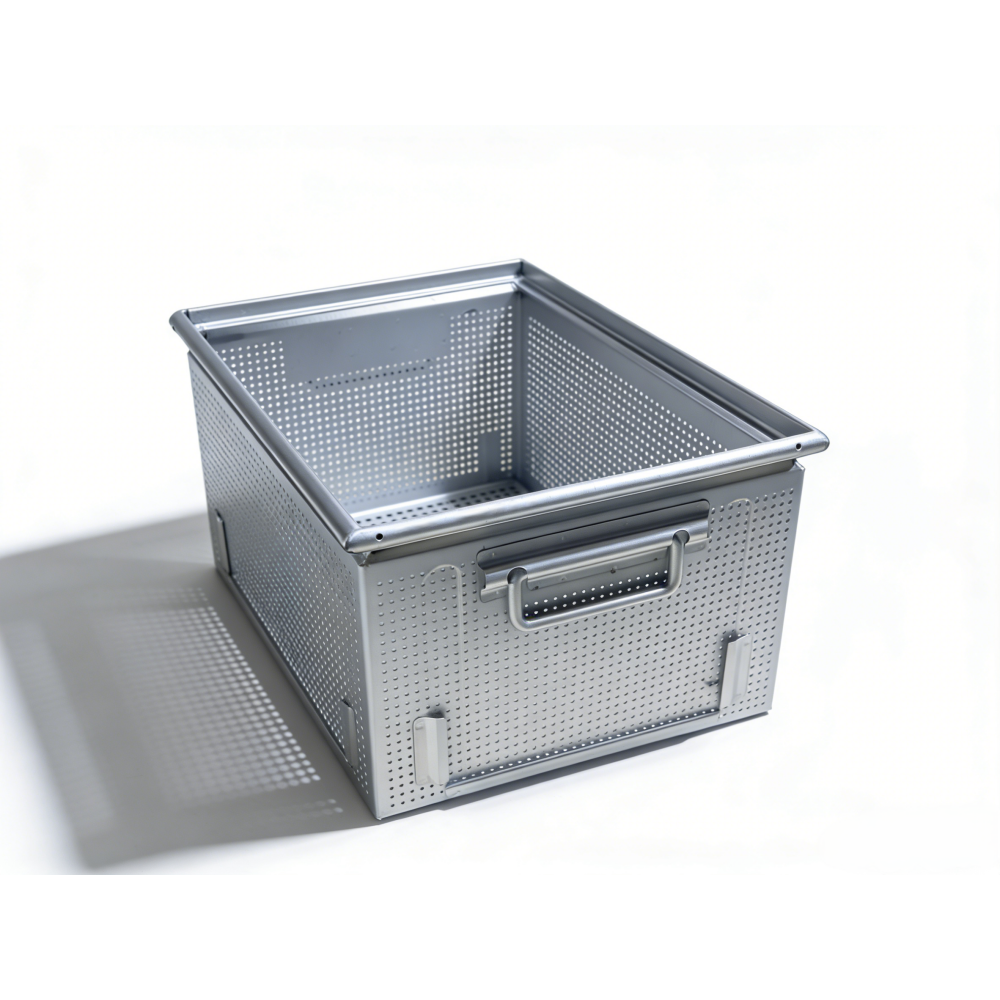
Check whether that edge becomes the lowest side during lifting. A return flange, hem or solid border may be holding the liquid behind it.
Look for a formed corner, overlap or distorted base that interrupts the route from the floor perforations to the side openings.
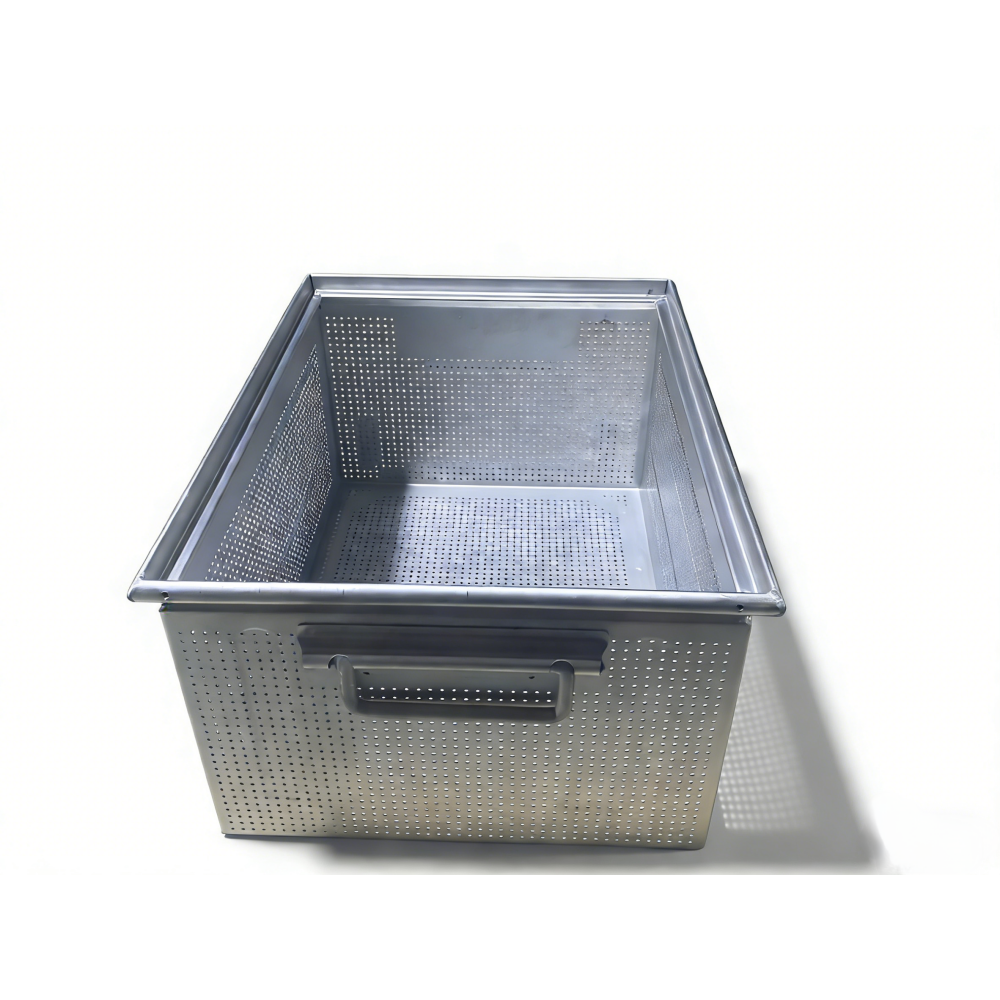
Review blocked holes, load coverage, pitch and total open area. The parts themselves may be closing a pattern that drains well when empty.
A perforated base may be level inside the cleaning chamber and inclined while the hoist accelerates or transfers the load. The low point can move from the centre of the floor to a side wall and then into a corner. If the hole pattern stops before that final point, liquid has nowhere to go until the basket is tilted by hand.
This is why an empty drawing view can mislead. The useful drainage path must be traced through every operating orientation: submerged, lifted, paused above the tank, transferred and placed in the next station.
FOLLOW ONE LIQUID PATH
Liquid crosses the perforated floor while parts cover part of the pattern.
The path meets bend radii, overlaps and any change in floor level.
Lift angle decides which side becomes the final collection line.
A side hole, notch or open detail must remain available at that location.
Treating these details as one variable makes the specification harder to control. AUKE separates their functions before a pattern is selected.
A larger hole is not a complete drainage correction
If the retained liquid sits on an unperforated flange, increasing holes in the middle of the base changes the wrong feature. First locate the last wet area; then change the opening nearest that path without compromising retention or fabrication.
A hem or return flange can stiffen an edge and remove an exposed sheet edge. A reinforced frame can keep a large basket square. Both details may be useful, but either can create a channel that retains liquid if its open end is no longer the low point.
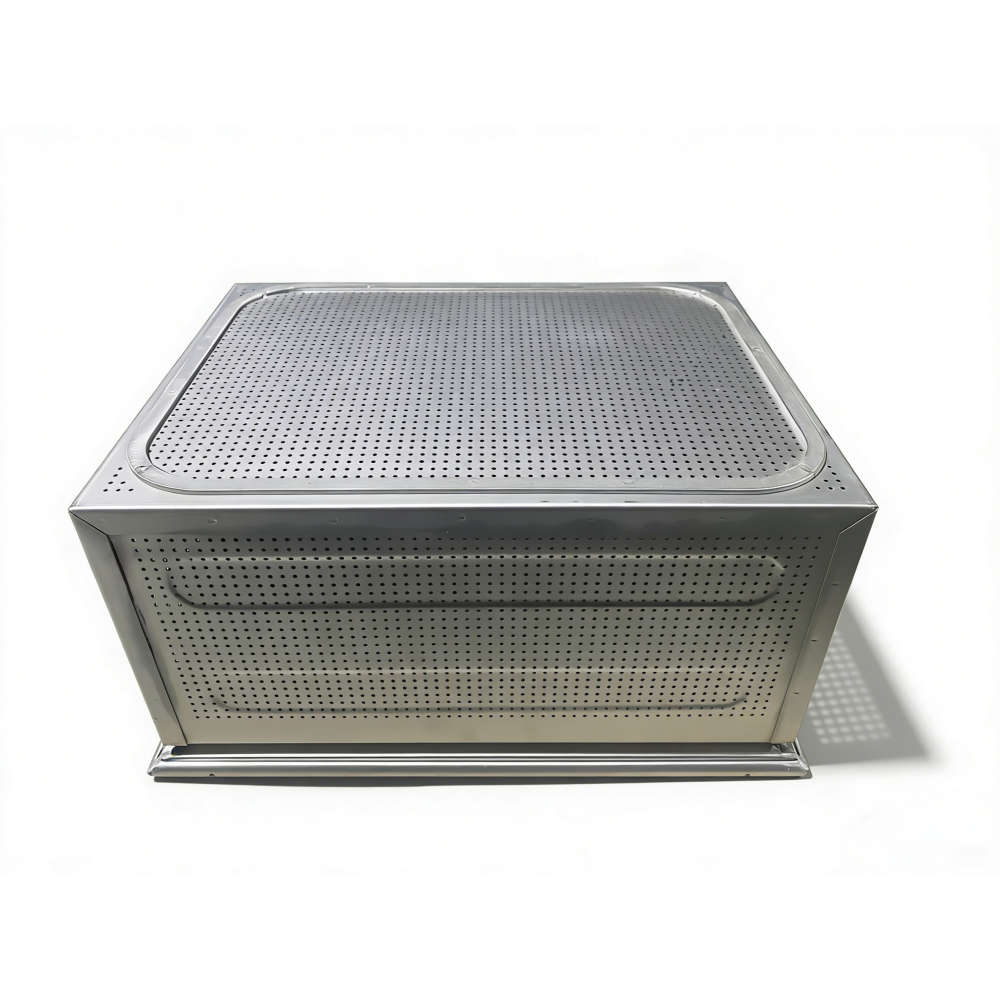
Corners deserve the closest look. Material overlaps, welds and bend radii can close the small route that appeared open in the flat layout. Welding heat can also pull the base enough to move the low point. For a formed edge drainage detail, we measure the finished corner opening and base profile after forming and joining.
There is no universal best edge. An open notch may drain well but expose a small-part escape route. Moving the first perforation closer to the bend may reduce the liquid ledge but leave too little material for a stable form. A separate side outlet may preserve the base pattern but needs a clear retention limit. The correct detail balances all three.
Keep a continuous opening at the lowest loaded orientation.
Prevent the smallest part or feature from entering the outlet.
Leave workable bend, ligament and joining conditions.
VERIFY THE REAL MOVEMENT
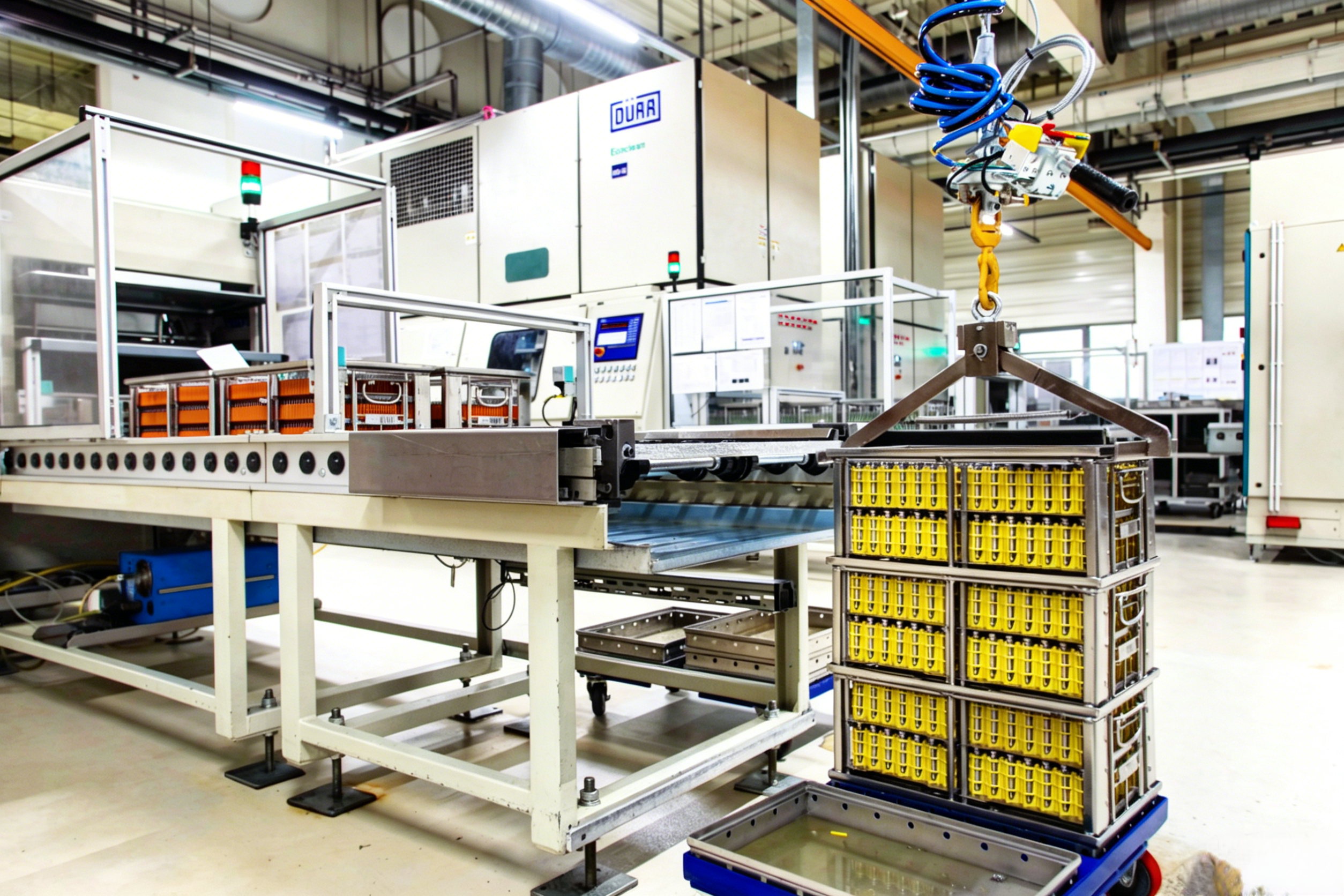
A basket that drains on a bench may retain liquid when lifted by a side handle, carried on a frame or paused at a transfer angle.
The representative trial should use the intended load, lifting interface and movement sequence. Record the location of the last wet line, not just the total drip time.
A useful custom basket brief connects the cleaning process to dimensions that purchasing and quality teams can verify. AUKE uses the following inputs to develop that connection.
At AUKE, we design the outlet around the loaded lift angle. We compare hole and edge options, then place the chosen features on the drawing. Relevant controls may include hole or slot dimensions, pitch, first-hole distance after forming, base flatness or intended slope, corner opening, support contact and orientation marks.
The drawing should describe the finished basket. Punching happens on flat sheet, but forming and welding determine where the holes and edge finally sit. We measure the post-form hole-to-edge distance and base profile from functional references. If either dimension moves outside the drawing limit, production corrects the forming or joining operation before the basket is released.
Start with evidence from lift-out
Send the part drawing, cleaning sequence, lift orientation and a short video of the retained liquid. We will locate the final low point and identify whether the hole pattern, formed edge or support geometry interrupts the exit path.
An empty basket trial can reveal a blocked corner, but it cannot show which holes the production load covers. Use representative parts, quantity and orientation in the customer's industrial cleaning machine. Keep the lifting method and transfer movement the same as production.
During the trial, mark the final wet area and compare it with the proposed outlet. Also inspect part retention, basket stability and any effect on cleaning access. A drainage change is not acceptable if it creates a new escape route or moves supports onto a critical surface.
Record: basket revision, part number, quantity, loading pattern, cleaning liquid, cycle, lift points and movement.
Observe: first collection area, last wet line, release location, carryover into the next zone and any operator intervention.
Decide: accept, change the drainage path, or investigate equipment and process causes before changing the basket.
No. Larger holes do not remove a solid low point at a formed edge or corner. They must also retain the part and leave a workable sheet structure.
Sometimes, but the bend can distort openings and weaken the remaining ligament. A hole row near the bend or a separate side outlet may be more controllable.
Slots can serve a directional exit path, while round holes have no preferred direction. Retention, forming, strength and tooling still need to be compared for the application.
Send the part drawing, smallest feature, load quantity, cleaning process, liquid, temperature, lift orientation, edge preference and images of the retained-liquid location.
Make the last wet line visible on the drawing
Share the loaded orientation, cleaning sequence, part drawing and photographs or video of the retained liquid. We will map the observed low point to the hole pattern, edge construction and finished dimensions that need control.
Discuss Your Cleaning BasketBy AUKE Engineering Team