


Views: 15 Author: Lucian Publish Time: 2026-10-16 Origin: Site


AUKE CLEANING BASKETS
Recessed internal handles solve machine clearance issues, yet they eat up valuable interior space for your parts and operator’s gloved hands. Select your handle style by balancing machine limits and real-world loading conditions.
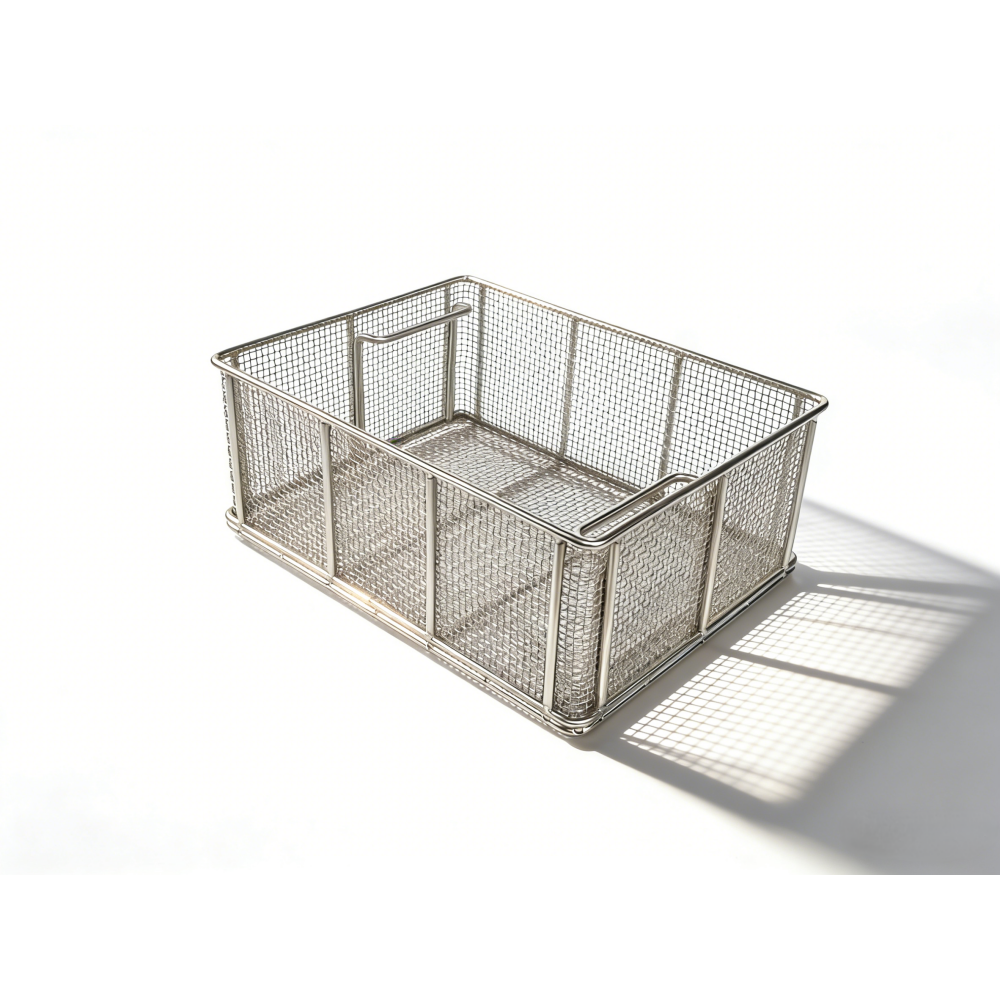
A simple protruding handle can catch on guide rails and stop an otherwise perfectly functional cleaning basket from sliding into the wash chamber. Moving handles inward sounds like an easy fix, but process engineers must ask one practical question: can operators still safely grip the handle when the basket is fully loaded with components?
Your basket must transport parts through every stage of cleaning and transfer, and handles are designed to match your actual material handling workflow. Recessed cleaning basket handles reduce outward projection, but they need dedicated clearance space between the grip, basket wall and the nearest workpiece. Without enough room, you may end up reducing batch sizes, struggling with awkward unloading, or facing costly basket rework.
External handles preserve the basket’s full internal volume for parts and fixtures. If your cleaning machine, transfer trolley and adjacent baskets provide enough side room, this is usually the simplest and most practical choice. There is no benefit switching to internal grips if it sacrifices loading capacity without resolving an actual collision risk.
Folding external handles help reduce footprint, but they do not disappear when folded. Mounting brackets, pivot points and grip bars still extend past the basket wall. Even raised handles need clear approach space for lifting. Always calculate clearance based on the fully assembled basket during transfer, not just the basket frame itself.
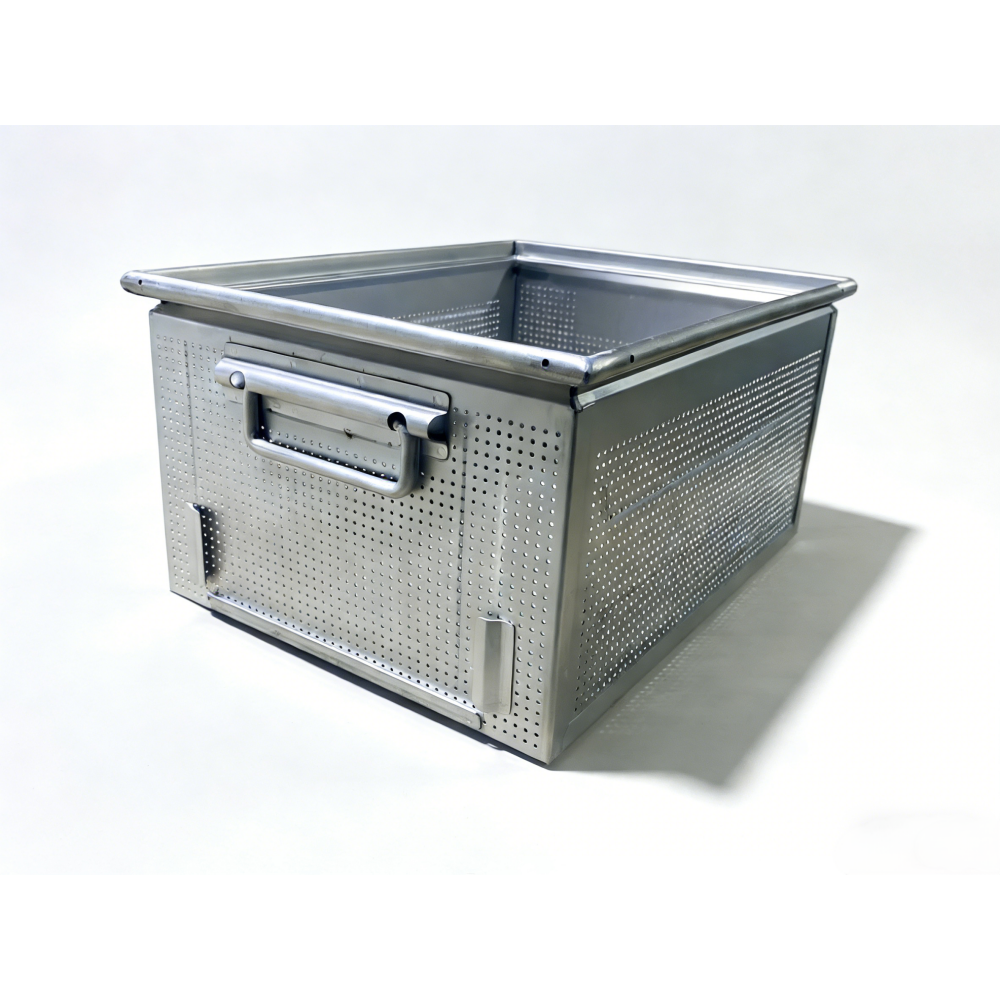
Folded grips and their brackets still stick out beyond the perforated basket wall. This projection must be included in all clearance checks.
Recessed handles are ideal when outward handle projection collides with fixed guide tracks, tight carriers or neighbouring baskets. However, the space they occupy inside the basket must remain fully accessible during loading. A workpiece that appears clear of the grip on 2D drawings may still block gloved fingers trying to lift the basket.
There is no universal measurement for grip clearance. Work gloves, hand entry angle, total loaded weight and lifting method all determine whether the handle can be used comfortably and safely. Do not use hand grips as hoist lifting points unless the design is specially engineered and validated for heavy overhead lifting.
A practical test: can operators load, grip and unload workpieces smoothly with either handle design? If recessed handles force you to remove parts from each batch, include that productivity loss in your design evaluation.
Wall cutouts offer another way to eliminate external handles, yet they introduce containment risks. Small components can shift toward these openings during transfer, even when they sit below the cutout at rest. Wall cutouts require finished edge treatment, part retention assessment and adequate finger space; they are not just a handle built without metal tubing.
Best suited when side clearance is available and you need the basket’s full internal width for parts. Evaluate folded projection and lifting path separately.
Consider this when outer dimensions cannot be increased. Mark grip zones on your part layout, and reserve enough room for gloved hands — not only the metal handle itself.
Viable only if parts cannot slip out and the opening creates a reliable grip. Verify part retention and edge quality before cutting openings into basket walls.
AUKE designs custom handle solutions, both recessed and external. Share photos of your loaded basket and note the location where your current handle catches on equipment. We assess viable grip positions before requesting full technical drawings. Email your handle photos to linda@auke-bott.com.
In our German customer perforated-basket project, the client required fully flush basket sides with zero outward protrusions. Cutting hand openings directly in the basket walls created risks of small parts escaping. Our solution was tubular handles recessed inside the basket frame.
This project demonstrates that project constraints dictate handle selection, not personal preference. Recessed grips are not the default solution for every workpiece load. The wire mesh basket shown below also features internal grips, but it is a separate product example, not the perforated basket from this German case study.
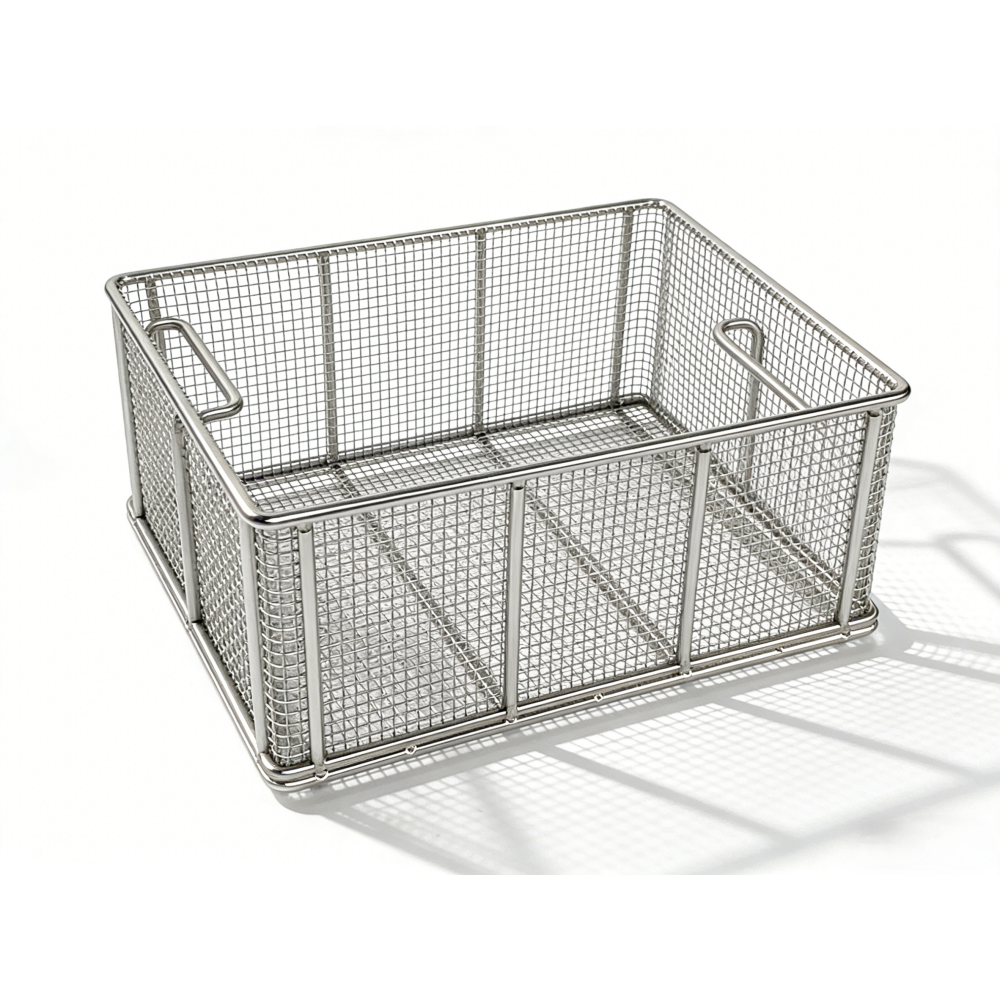
The grip zone sits within the loading area. Your part layout must keep this zone accessible; parts should not merely avoid touching the metal handle.
Handle placement changes how lifting force transfers into the basket frame. Mounting a handle on rigid frame members performs far differently than attaching it to thin perforated sheet or lightweight mesh. Sheet thickness, remaining material around holes, and frame connections all must support your total loaded weight.
Bent rod or tube forms the basic grip shape, but welding heat can shift handle alignment as joints cool. A clean, polished weld does not guarantee lifting strength. Joint design and load validation need clear agreed specifications, rather than simply adding a heavy-duty handle onto a thin basket wall.
For recessed handle designs, we map grip positions against part drawings and mark internal zones that must stay clear. Before manufacturing starts, we document maximum projection, grip clearance and mounting points on controlled engineering drawings. Final finished dimensions and tolerances are more valuable for repeat orders than nominal basket sizes alone.
Build a prototype sample so operators can load parts, grasp handles and run through standard transfer workflows. This usability test is separate from load safety verification. Customer and supplier should agree on who performs each assessment and under what conditions.
From a purchasing perspective, the best handle design preserves your existing loading and handling workflow. A recessed basket that fits inside the machine but requires removing parts before lifting only shifts operational delays to another step. The final design should eliminate this workaround.
They reduce outward protrusion but consume internal basket space. The net benefit depends entirely on your part layout and the room required for hands or handling equipment.
Only if it leaves the grip and removal path fully usable. Always test the fully loaded basket with your real handling procedure, including work gloves.
Yes, provided folded brackets and moving grip clear surrounding equipment. This style often preserves more usable internal space compared with recessed grips.
Absolutely. Photos of your loaded basket and the interference point are enough to start discussions. Full dimensions and attachment specifications are only needed once sample design begins.
Custom metal baskets and handle options
Checking the complete cleaning-machine interface
Send two photos: one of your loaded basket and another showing where handles collide with equipment. We will evaluate suitable grip locations and outline the dimensions required next. Photos alone cannot verify lifting load capacity.
Discuss Your Handle LayoutPrefer a form? Contact AUKE
By AUKE Engineering Team


