


Views: 15 Author: Site Editor Publish Time: 2026-10-16 Origin: Site


AUKE CLEANING BASKETS
The lid is still shut, but the batch is short. Before adding another latch, find where the part could escape: through the closed perimeter or through a gap beneath the cover.
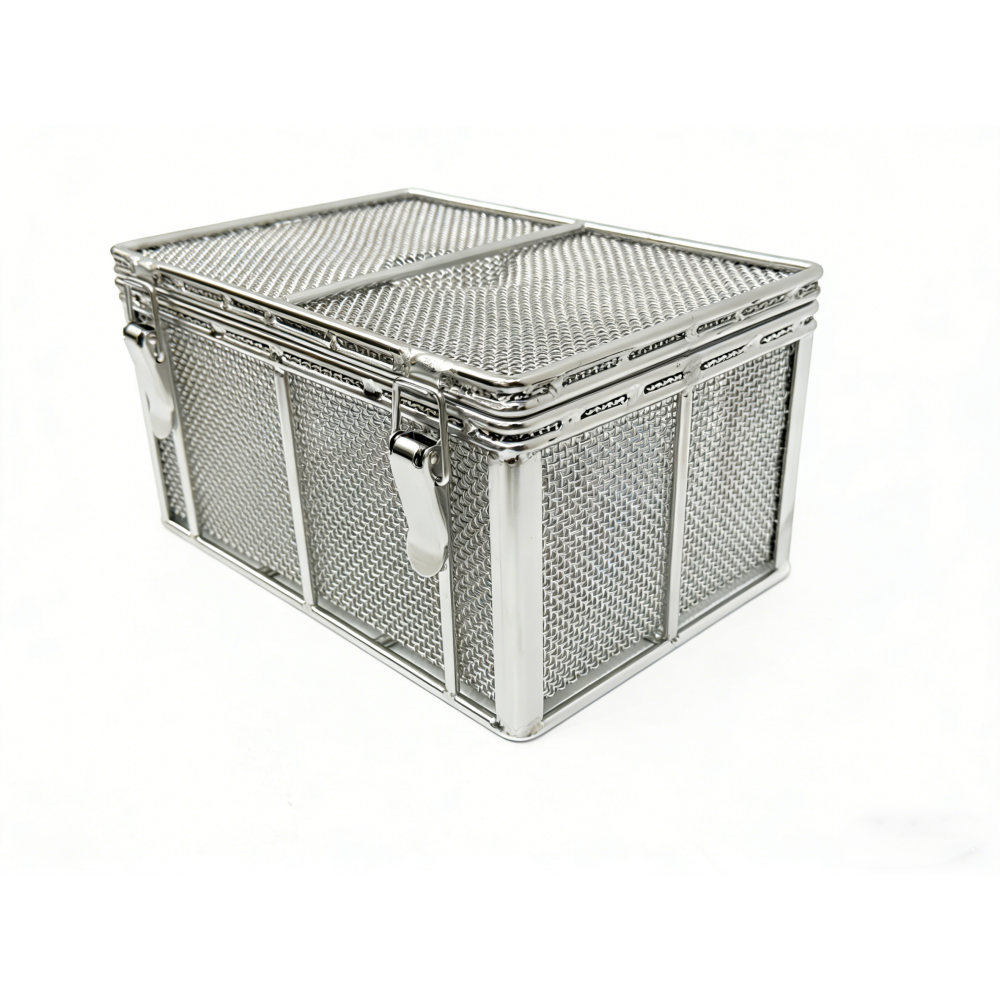
A missing component after cleaning creates more than a counting problem. Production may stop while the basket, carrier and machine are searched under the site procedure. For a quality engineer, finding the lid still closed rules out only one obvious explanation: it does not prove that the part stayed inside.
Rotating cleaning basket lids keep the top of the container enclosed as its orientation changes. During a cycle, loose parts may move away from the base and toward the sides or cover. The basket must retain them in those positions while allowing the intended cleaning action.
The latch keeps the cover attached. The mesh, perimeter, corners and overlap determine whether a component can pass through the closed basket. A secure latch cannot compensate for an oversized opening at the opposite corner.
The cleaning machine may also hold a basket or cover in place. That arrangement must be confirmed with the equipment supplier; it should not be assumed from the presence of a rotating carrier. A cover that relies on machine restraint can behave differently during loading and transfer outside the chamber.
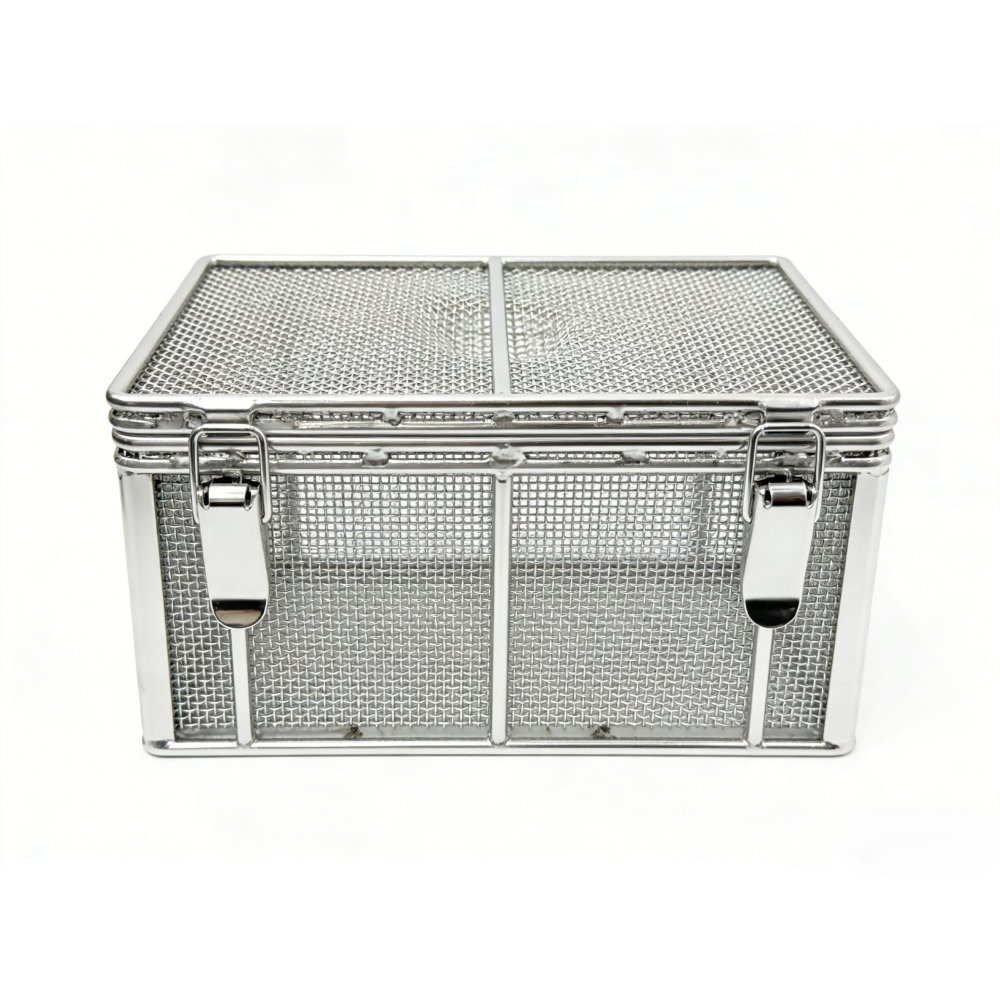
The front view shows the closure hardware and the neighbouring frame edges. It does not show a verified retention limit or the latch capacity. Those depend on the part, the completed lid fit and the operating load.
If a corner lifts while the latches remain engaged, the next design question concerns the cover fit or stiffness. More closing force at the front may leave that corner unchanged.
Nominal mesh size is only the starting point. A short pin may approach a gap end first, while a thin component may turn on edge. The relevant shape is the smallest actual part across its permitted dimensional range, not only its largest width.
An escape path can occur where the lid mesh meets its frame, where two frame members meet at a corner, or where the cover sits above the rim. These locations deserve separate attention because they are made differently. None can be inferred from a mesh specification alone.
Does the cover overlap the rim, or do two edges merely meet? The finished gap matters along the complete side, including the area furthest from a latch.
Does the smallest part have a route through the junction of frame members? A square side opening does not describe a corner made by bending and joining wire.
Can the load reach the lid as the basket turns? Any change in gap under that condition belongs in the assessment, not just the empty-basket measurement.
At AUKE, custom baskets can include lids and part-specific internal arrangements. From a closed-lid photograph and the smallest part, we identify candidate escape locations rather than assume the latch is at fault. We compare whether the concern calls for a different edge detail, a better-supported cover or internal restraint.
A photo is enough to start that discussion; it is not enough to confirm rotational suitability. Email the part and lid photos to linda@auke-bott.com, with a short description of the machine movement.
Containment is not the same as protection from impact. A lid may prevent a part leaving the basket while still allowing it to strike the cover. If those impacts can damage a finished surface, the load needs a separate restraint decision.
A loose bulk load and individually located components impose different demands. Parts intended to tumble need space and a cover suitable for the agreed duty. Delicate parts may instead need supports that limit movement without relying on contact with the lid.
Reducing empty space is not automatically the answer. Pressing the lid onto a component can mark a critical surface or block cleaning access. If restraint is needed, its contact location should follow the part drawing and the allowed movement, rather than whichever surface is highest.
The same distinction applies to a divider. It may separate groups of parts without stopping them lifting above the divider when inverted. A lid over the outer basket does not necessarily preserve the boundaries between its internal compartments.
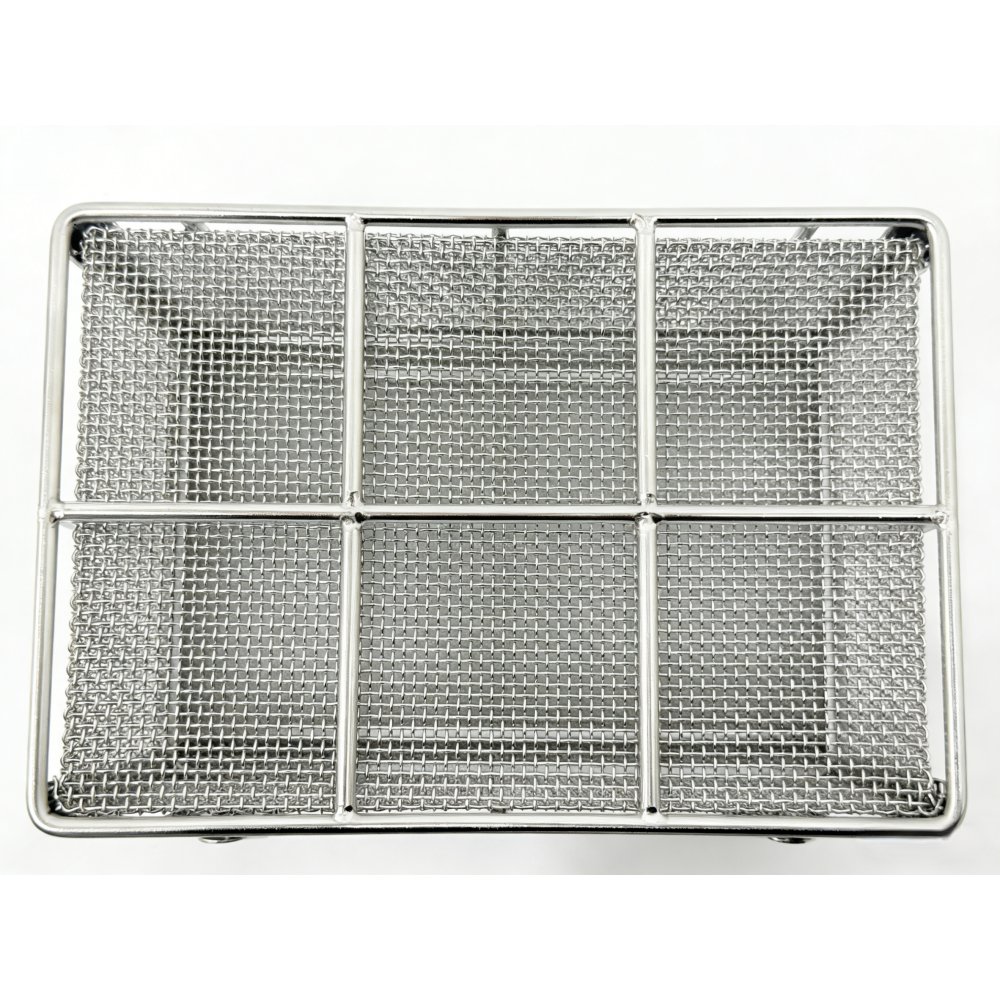
The mesh and reinforcing members are separate parts of the cover. Their visible arrangement helps define what to examine, but does not establish a load rating.
Cut mesh, bent frame members and welded joints come together at the perimeter. Welding distortion can leave a corner high even when the overall length and width are correct. Latch engagement, lid overlap and the largest finished gap therefore need their own drawing references.
For a proposed custom lid, we can document those critical dimensions alongside the loaded weight, smallest retained part and intended movement. Tolerances should describe the assembled basket, not only the separate cover. A repeat order also needs the same drawing revision and closure components, or its fit may differ from the sample.
Any moving closure component also needs to suit the cleaning medium and temperature. A latch that works dry at room temperature has not thereby been qualified for the operating cycle. The selected hardware and its service conditions should be agreed before the design is released.
A stationary, unloaded fit check can reveal an obvious gap. It cannot establish what happens when the actual load reaches the cover during rotation. A representative assessment needs the intended parts, loading pattern and machine restraint, under a procedure agreed with the equipment supplier.
The outcome should include missing parts, migration between compartments, contact damage and whether the closure remains properly engaged. A missing part is not proof of a lid fault: loading counts and losses during transfer also need to be reconciled. Any trial involving rotation belongs in suitable guarded equipment, not an improvised hand-turning test of a heavy load.
Not necessarily. The required closure depends on the cover construction, machine restraint and operating loads. Latch count alone does not define the retention gap or cover strength.
Only if mesh openings are the escape route. It will not close a gap between the lid frame and basket rim.
Only where a deliberate restraint design permits that contact. A containment lid should not be assumed to clamp finished parts without risk of marking or obstructing cleaning.
Start with the smallest part, the closed basket and the machine movement. A sample specification will then need relevant dimensions, load details and agreed operating conditions.
Custom metal baskets with lids and internal supports
Allowing space for the complete basket assembly
Share clear photos of the rim, corners and closure, plus the machine movement. We will identify the containment details to discuss and the measurements needed before proposing a custom lid or restraint.
Discuss Your Basket LidPrefer a form? Contact AUKE
By AUKE Engineering Team


